Understanding Seiko Watch Reference Numbers
If you've ever compared two seemingly identical Seikos, say an SNXS79K1 and an SNXS79J1, you might have noticed a different price, different availability, and a small "21 Jewels" mention on one but not the other. Many collectors then think they're dealing with two distinct watches, one "superior" to the other. In reality, these suffixes almost never change the product itself. They indicate where the watch was assembled and for which market it was originally intended. This article provides a clear and verified explanation of what these letters and numbers at the end of Seiko references mean.
Summary
The Seiko reference system, in brief
What the letters J, K, and P mean
The myth of "better quality"
The final digit: which strap, which finish
A concrete example: the SNXS79
The link with Arabic Dial models
How to check your own watch
In summary
The Seiko reference system, in brief
First, two things that are often confused need to be distinguished. On one hand, there is the commercial reference, which appears on labels, in catalogs, and on sales websites, in a form like SSC911P1 or SRPD51K1. It is this reference, with its letters and final digit, that interests us in this article. On the other hand, there is a code engraved on the case back, in a form like 7S26-0020, which is an internal Seiko identifier. The first four characters of this code designate the caliber, i.e., the movement, and the next four designate the case type. This code is mainly used for spare parts and technical identification; it is independent of the commercial reference and does not supersede it.
On the commercial reference itself, the initial letters designate the family or collection to which the watch belongs. The following digits identify the precise model within this collection, with its dial color or particular finish. Then comes the part that interests buyers the most: a letter (J, K, or more rarely another), followed by a digit. This reference is often found only on the product label.
What the letters J, K, and P mean
This is the point that causes the most confusion and has fueled debates on enthusiast forums for years. Here's what we can state with a good level of confidence.
The letter J: assembly in Japan
A model ending in J indicates that the watch was assembled in Japan, according to Japanese regulations governing the "Made in Japan" designation. These models are historically intended for the Japanese market and for certain export markets where the "Made in Japan" designation has a recognized commercial value, particularly in the Middle East and Asia.
It is also the letter that sparks the most debate among enthusiasts. A significant portion of collectors, especially on specialized forums and in Japan itself, actively seek J references rather than their K equivalents, even if it means paying more for an otherwise strictly identical model. This preference is explained by several reasons that have little to do with the actual quality of the watch. The "Made in Japan" designation retains strong symbolic value in watchmaking, much like "Swiss Made" for a Swiss watch, even when the manufacturing difference between two factories of the same group remains minimal. On the Japanese second-hand market in particular, J references often resell for significantly more than their K equivalents, which leads some buyers to view these models as a better investment for resale, regardless of their actual use of the watch.
However, it should be kept in mind that this pursuit of the J designation is primarily a collector's preference, not a confirmed quality difference. Seiko applies the same controls and standards across all its assembly sites, whether located in Japan or elsewhere.
The letter K: assembly outside Japan
A reference ending in K simply means that the final assembly took place outside Japan, most often in Malaysia, but also historically in Singapore or Hong Kong depending on the period and factories. Contrary to a widely held misconception, K does not mean Korea. The movement itself may have been manufactured in Japan and then simply cased and assembled in another factory of the Seiko group.
Be careful, there are exceptions; some series are indeed manufactured in Japan yet end in "K"... the mysteries of Seiko!
The letter P and other cases
The letter P is more rarely encountered on certain references, the exact meaning of which remains debated even among specialists, with the most frequent hypothesis being a specific market or assembly site in Southeast Asia. For lack of clear official confirmation from Seiko on this precise point, we prefer to remain cautious rather than put forward an unverified explanation.
It should also be noted that a complete absence of suffix, or a reference composed only of numbers, often corresponds to a North American distribution, where Seiko USA generally does not use these designations.
The myth of "better quality"
This is the most important point to understand: a J1 reference and its K1 equivalent are, in the vast majority of cases, rigorously the same product. Same movement, same case, same specifications, same quality controls. Seiko applies the same manufacturing standards in all its factories, whether located in Japan or elsewhere.
The most frequent visible difference is limited to a mention on the dial, such as "21 Jewels" or "Made in Japan," and sometimes the language of the day of the week on the calendar (English, Arabic, or Kanji depending on the target market).
It's worth noting that for the same reference, the Japanese version will generally be 10 to 15% more expensive than the "K" version due to the higher labor cost in Japan.
The final digit: which strap, which finish
Once the letter is passed, a digit almost always follows, such as the 1 in J1 or K1. This digit indicates neither quality nor place of manufacture, but the strap version or finish offered for that specific model. In many ranges, a logic similar to this is found, although it is not universal across the entire Seiko catalog:
1 generally corresponds to a metal bracelet. 2 often corresponds to a leather strap. 3 frequently corresponds to a rubber, silicone, or NATO strap.
This correspondence varies from one collection to another, and the only way to be one hundred percent certain is to check the technical sheet of the specific model rather than relying solely on the digit.
Here's an example for the SRP65:
SRPD65K1: steel bracelet
SRPD65K2: silicone bracelet
SRPD65K3: silicone and leather strap
SRPD65K4: NATO strap (fabric)
A concrete example: the SNXS79
Let's take the case of the SNXS79K1 and the SNXS79J1, two references regularly encountered by enthusiasts of small automatic models. The SNXS79 base designates an identical model and configuration: same oval case, same 7S26 movement, same black dial, same steel bracelet. The K1 version was assembled outside Japan, the J1 version in Japan. On the dial, the J1 bears the mention "21 Jewels" which is not found on the K1. Apart from this detail, and sometimes a differently displayed weekday, it is indeed the same watch, with the same level of finish and the same expected reliability.
Seiko SNXS79K1
Seiko SNXS79J1
Clearly, Seiko guarantees the same specifications, and once in hand, it is impossible to see any difference.
The link with Arabic Dial models
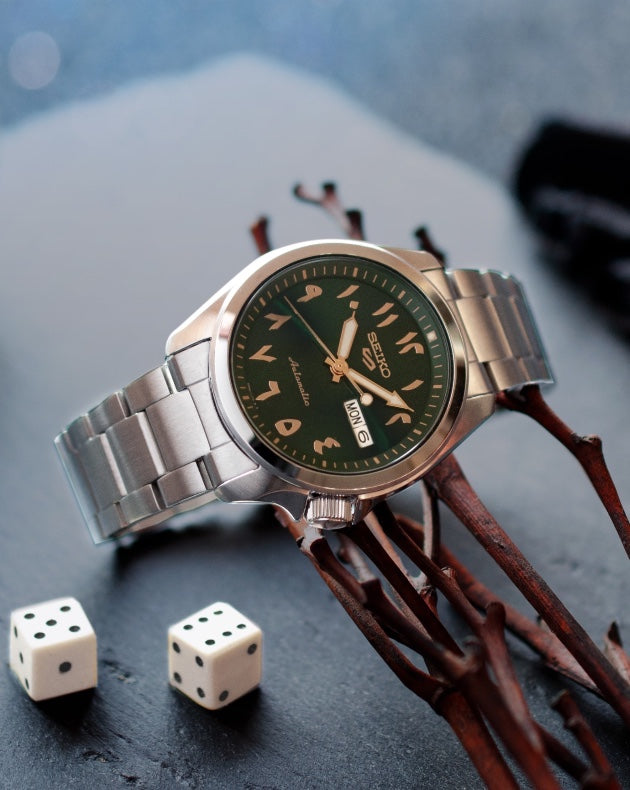
This topic is particularly close to our hearts at PSB Watches, as our specialty is precisely Seiko watches with Arabic dials. These Arabic Dial models, historically produced for Middle Eastern markets, bear both the J and K suffixes, with the weekday displayed in English and Arabic rather than Japanese Kanji. Understanding the logic of the J and K suffixes therefore allows for a better understanding of the origin and intended destination of an Arabic Dial model, without questioning its quality or authenticity if one comes across a K variant of the same model.
Thus, we will find 3 Made in Japan models, SNK063J5, SNKP21J1, SNKP22J1 and 3 models from outside Japan with the SRPH47K1, SRPH49K1 and SRPH50K1.
How to check your own watch
To confidently identify the nature of a reference, several elements can be cross-referenced. The case back usually has the complete reference engraved, including the letter and digit. The dial, at the bottom near the 6 o'clock window, sometimes displays a "Japan" or "21 Jewels" mention, confirming Japanese assembly. Finally, on some movements visible through a transparent case back, the mention "Japan" also appears on the plate or rotor when assembly took place in Japan.
In summary
The J, K suffixes and their variants are not an indicator of quality, but an indicator of the place of assembly and the original market. A Seiko J1 and its K1 equivalent share the same specifications, the same movement, and the same careful manufacturing. The choice between the two is primarily a matter of personal preference, whether it's the "Made in Japan" mention on the dial or the availability of a model in a given market.
CONTINUE READING
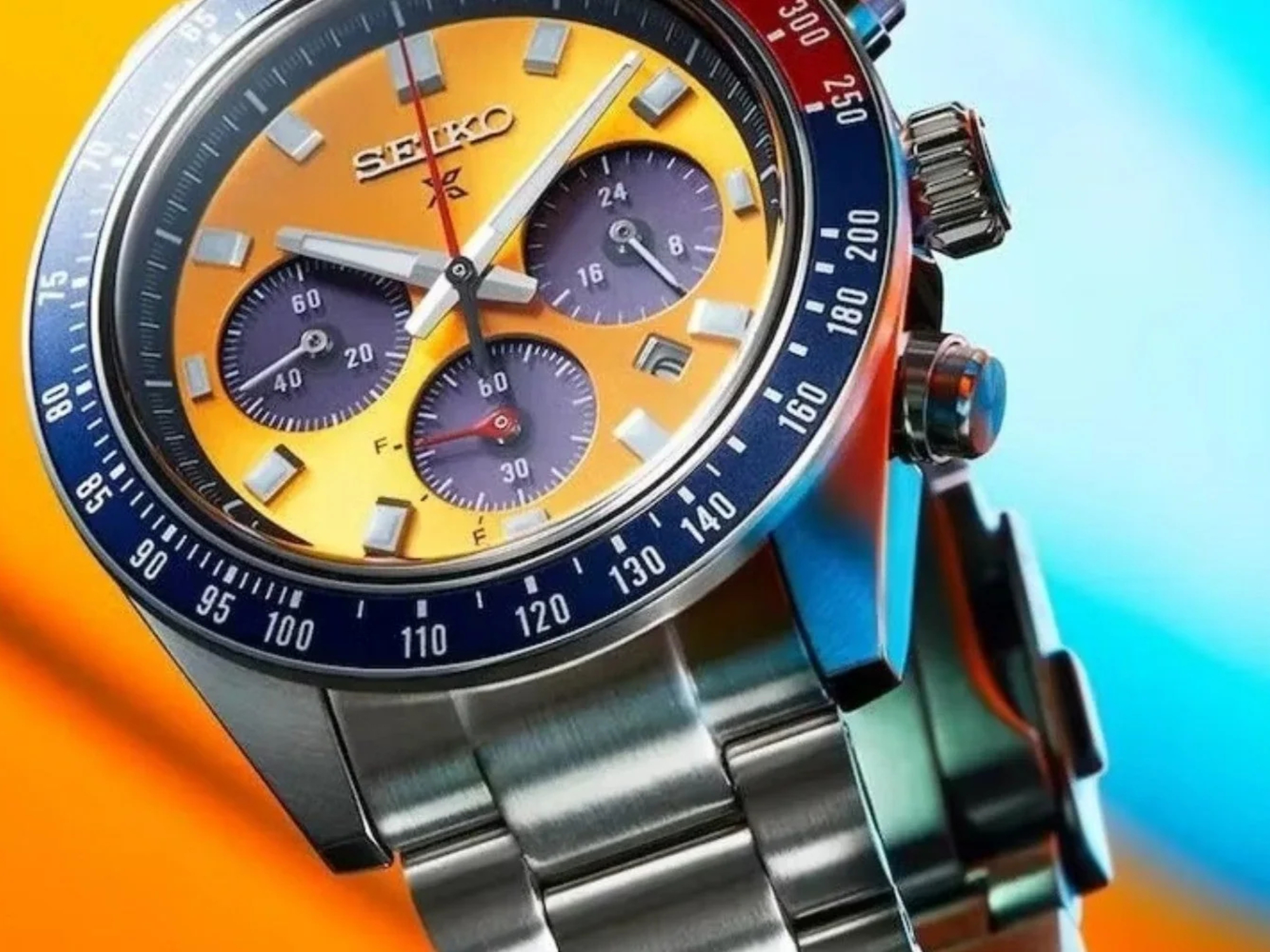
Solar watches: history, operation, battery life, comparison and advice PSB Watches
Solar watches, also known as "solar" watches, use light to power themselves without a traditional battery. Thanks to a photovoltaic cell integrated under the dial, they offer autonomy, precision, ...
Read more
Casio F-B100W - the cult digital watch makes a connected comeback
Discover the Casio F-B100W, a digital watch with an 80s design, Bluetooth, and a pedometer. Available in 3 colors at PSB Watches.
Read more
1 comment
Angel
Leave a comment
This site is protected by hCaptcha and the hCaptcha Privacy Policy and Terms of Service apply.